Is Israel a beautiful country? Yes, and what makes it unusual is how much variety fits into a small space. In a single day’s drive you can go from green hills in the Galilee to Mediterranean beaches, the golden stone of Jerusalem, the Dead Sea at the lowest point on land, the desert craters of the Negev and the coral reefs of the Red Sea. It is at its best from autumn through spring. High summer is fiercely hot, and the north turns brown.
Is Israel a beautiful country?
The honest answer is yes, though not in the way people usually expect. Israel doesn’t have one signature landscape the way Iceland has glaciers or Switzerland has the Alps. What it has is range: a long Mediterranean coastline, forested hills, a freshwater lake and a salt lake both far below sea level, desert canyons, and a coral reef, all inside a country you can cross from north to south in a day.
That compression is the point. In most countries the next landscape is a long journey away. In Israel it’s often an hour’s drive. You can swim in the Mediterranean in the morning and float in the Dead Sea by the afternoon.
Almost all of it is layered with history, too. Ancient ports, hilltop fortresses, stone cities and Bauhaus boulevards sit inside the landscape rather than apart from it, and a lot of Israel’s beauty is in how the two meet.
See for yourself: Tel Aviv, Jerusalem, the Dead Sea and more from the air, in 4K.
One small country, north to south
From 1,200 metres up to 430 metres below sea level
Above sea levelBelow sea level
Sea level
Mount Meron+1,208 m
Sea of Galilee−210 m
Mount Carmel, Haifa+546 m
Tel AvivSea level
Jerusalem+754 m
Dead Sea−430 m and falling
Mitzpe Ramon+860 m
EilatSea level
Approximate elevations, listed from north to south. The Dead Sea’s surface drops by around a metre a year.
The most beautiful places in Israel, north to south
Lists of the most beautiful places in Israel tend to start in Jerusalem and stop there. This one runs the length of the country, because the variety is what sets Israel apart. For deeper guides to individual places, see the Masa Israel travel blog.
North · Galilee
The Sea of Galilee
Israel’s freshwater lake sits more than 200 metres below sea level, ringed by hills that turn vivid green after the winter rains. The water is calm, the light at dawn is soft, and the towns and kibbutzim around its shore make it easy to spend a slow few days here.
Best time
February to May
Don’t miss
Sunrise over the water from the Tiberias promenade
North · Upper Galilee and the Hula Valley
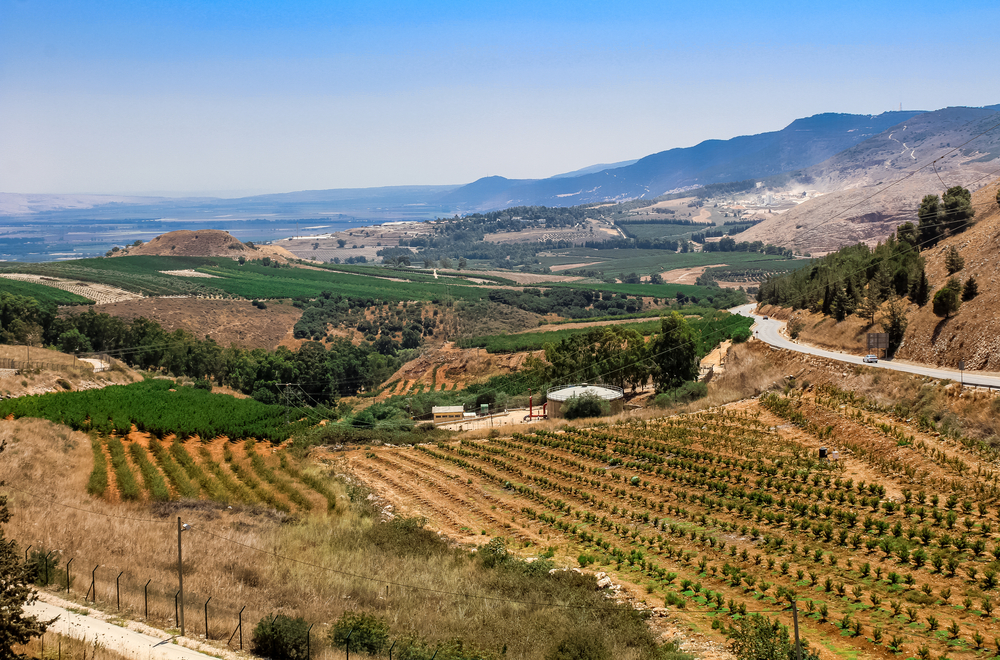
The green north
Israel’s far north looks nothing like the desert most people picture. Streams and waterfalls run through shaded nature reserves, and winter and spring turn the hills a deep, almost European green.
The Hula Valley sits on one of the world’s great bird migration routes, with an estimated half a billion birds passing over Israel each spring and autumn. In winter, tens of thousands of cranes stay in the valley, and the sight of them lifting off the water at dawn is one of the country’s most striking spectacles.
Best time
November to April
Don’t miss
The cranes at Agamon Hula at sunrise
North coast · Haifa
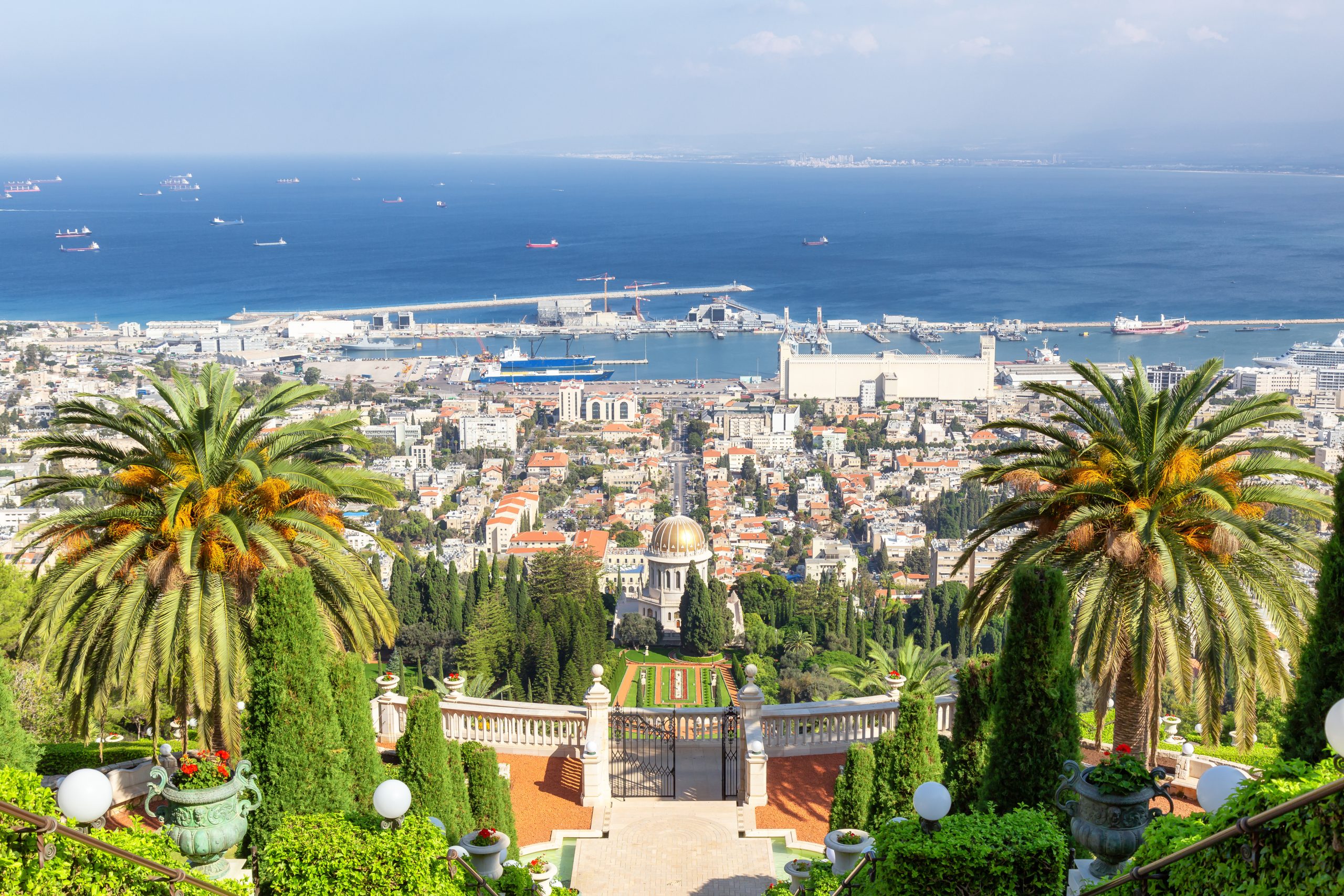
Haifa and the Bahá’í Gardens
Haifa climbs from the port up the slopes of Mount Carmel, and its centrepiece is a flight of manicured garden terraces running straight down the mountain toward the sea. The Bahá’í holy places in Haifa and the Western Galilee are a UNESCO World Heritage Site, and the view from the top of the terraces, down across the bay, is one of the best in the country.
Best time
Year-round
Don’t miss
The view from the upper terrace, out over the bay
Coast · Tel Aviv
The Mediterranean coast
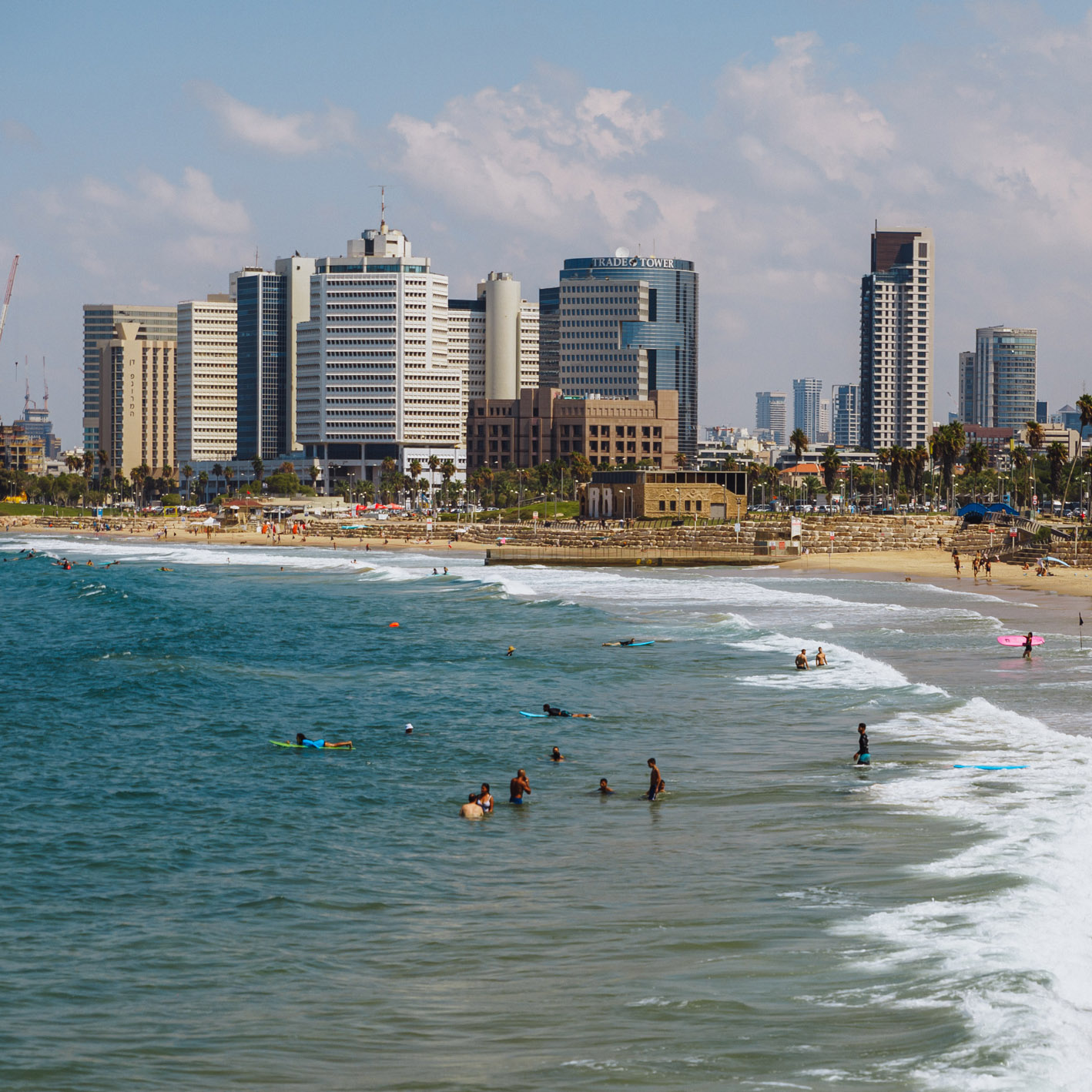
Israel’s whole western edge is Mediterranean coastline, and the stretch through Tel Aviv is a city beach in the best sense: long, sandy, and used by everyone from early-morning swimmers to evening volleyball games. Because the coast faces west, the sun sets straight into the sea, and at the end of the day half the city seems to be on the sand watching it.
Best time
May to October for swimming
Don’t miss
Sunset from the promenade, any time of year
Coast · Tel Aviv
Tel Aviv’s White City
Tel Aviv holds one of the world’s largest concentrations of International Style buildings, often called Bauhaus, most of them built in the 1930s by architects who had trained in Europe. Their white walls, rounded balconies and strip windows earned the area its name, and in 2003 the White City was inscribed as a UNESCO World Heritage Site.
Best time
Year-round
Don’t miss
Rothschild Boulevard and the streets around Dizengoff Square
Coast · Jaffa
Jaffa
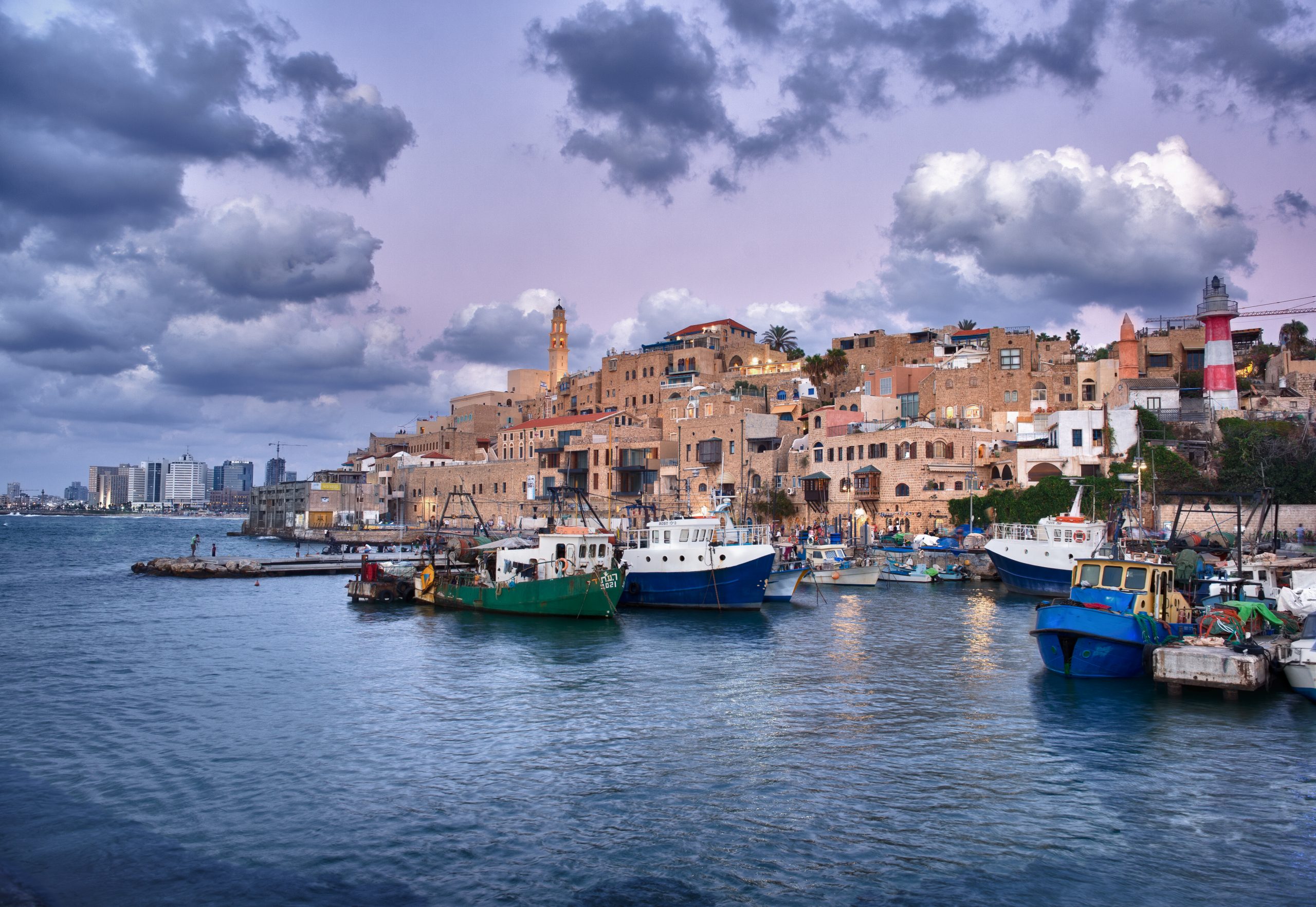
Jaffa is among the oldest ports in the world, and its stone alleys, arches and fishing harbour feel a long way from the towers of Tel Aviv just up the coast. Walk up through the old city to the top of the hill, and the whole Tel Aviv shoreline opens out to the north.
Best time
Year-round
Don’t miss
Sunset over the port, looking back at the Tel Aviv skyline
Judean Hills · Jerusalem
Jerusalem
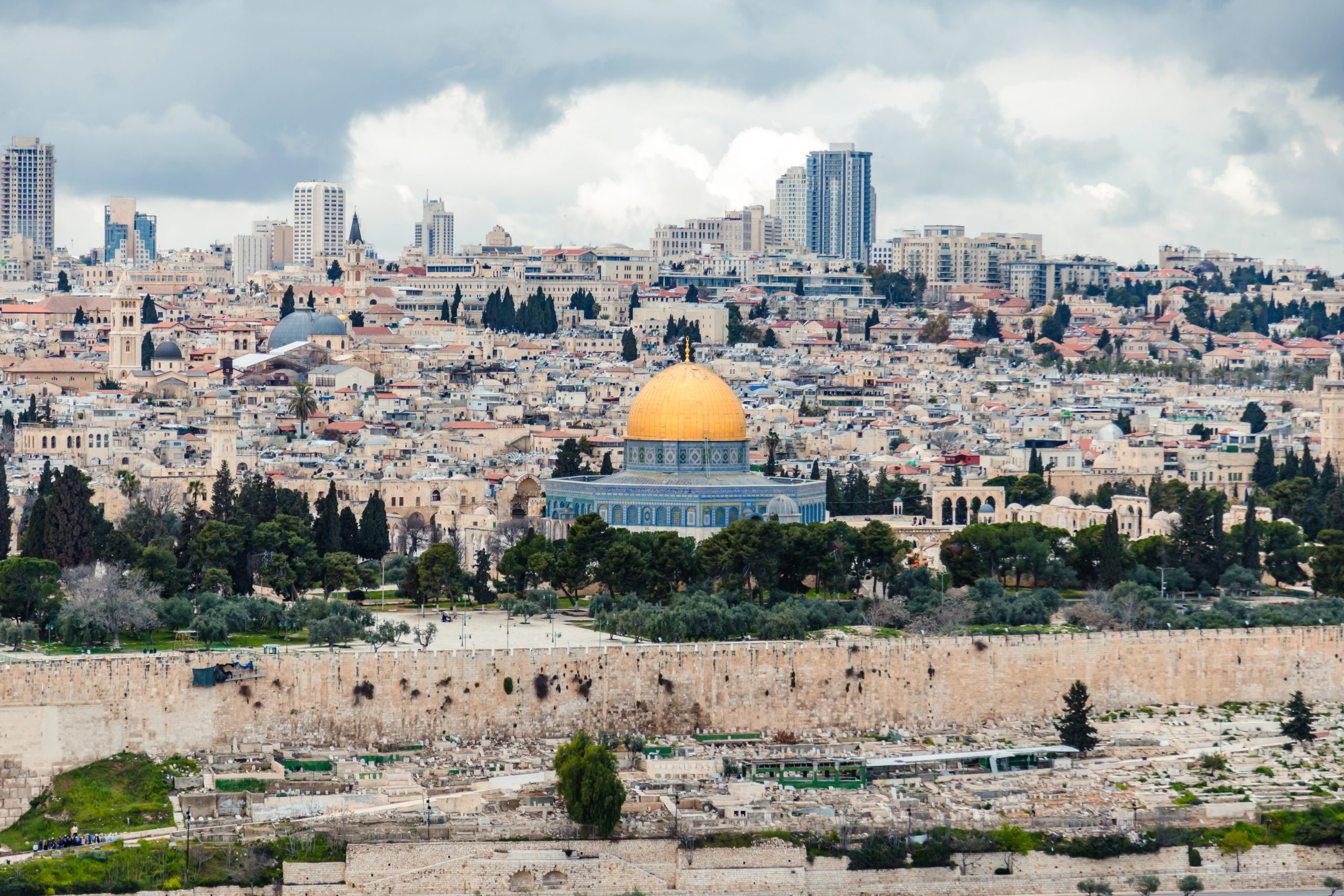
Jerusalem’s beauty is mostly about stone. A rule dating back to the British Mandate requires buildings to be faced in local limestone, so the whole city shares one pale, warm surface that turns gold in the evening light, which is where the phrase “Jerusalem of gold” comes from. It sits in the hills at around 750 metres, and the cool evenings and the views across the valleys are part of what makes it feel so different from the coast.
Best time
March to May, September to November
Don’t miss
The Old City walls at sunset
Judean Desert · Dead Sea
The Dead Sea
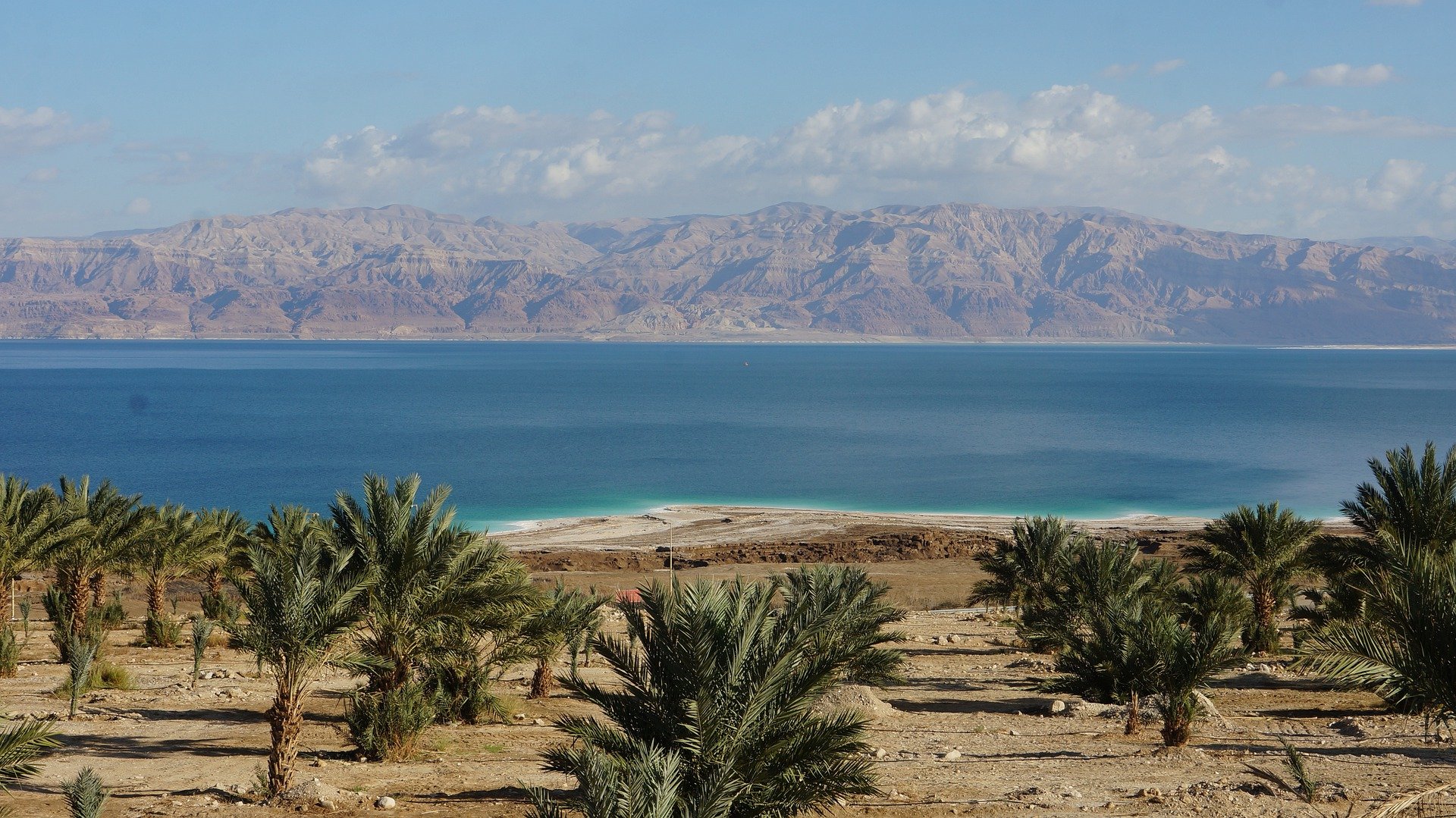
The Dead Sea is the lowest point on dry land on Earth, more than 430 metres below sea level, and roughly ten times saltier than the ocean, which is why you float without trying. The water is a strange, milky turquoise against white salt formations and bare desert cliffs, and at dawn the mountains of Jordan glow pink across the water.
Best time
October to April
Don’t miss
Sunrise over the water from the western shore
Judean Desert · Masada
Masada
Herod’s fortress sits on a flat-topped mesa above the Dead Sea, and it is a UNESCO World Heritage Site. The classic way to see it is to climb the Snake Path before dawn and watch the sun come up over the Dead Sea from the top, with the desert spreading out below in every direction.
Best time
October to April
Don’t miss
The sunrise climb up the Snake Path
Negev Desert · Mitzpe Ramon
Makhtesh Ramon
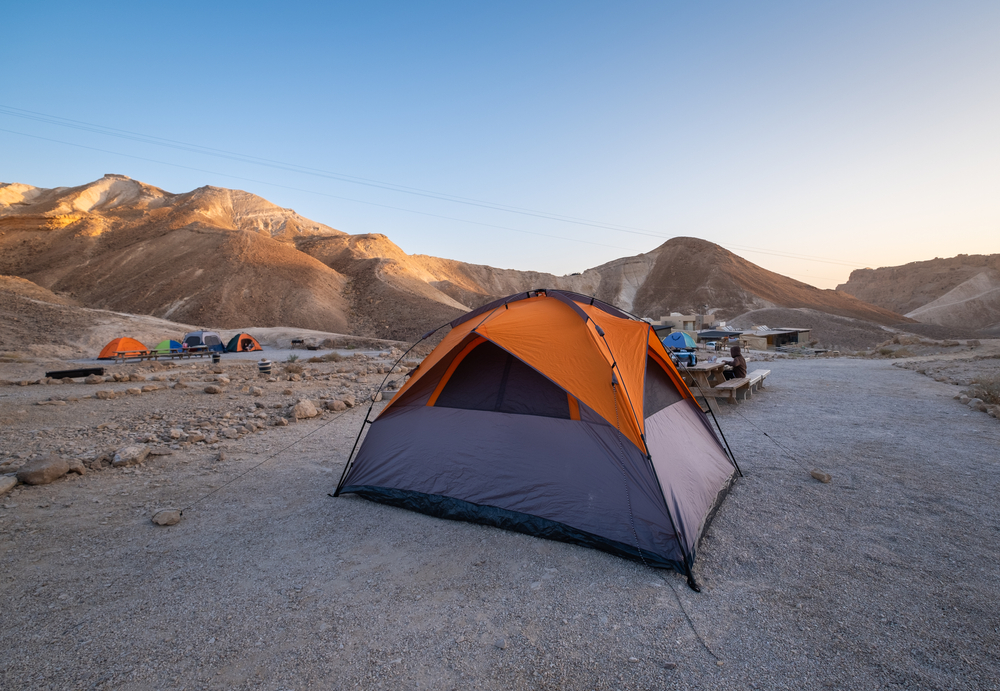
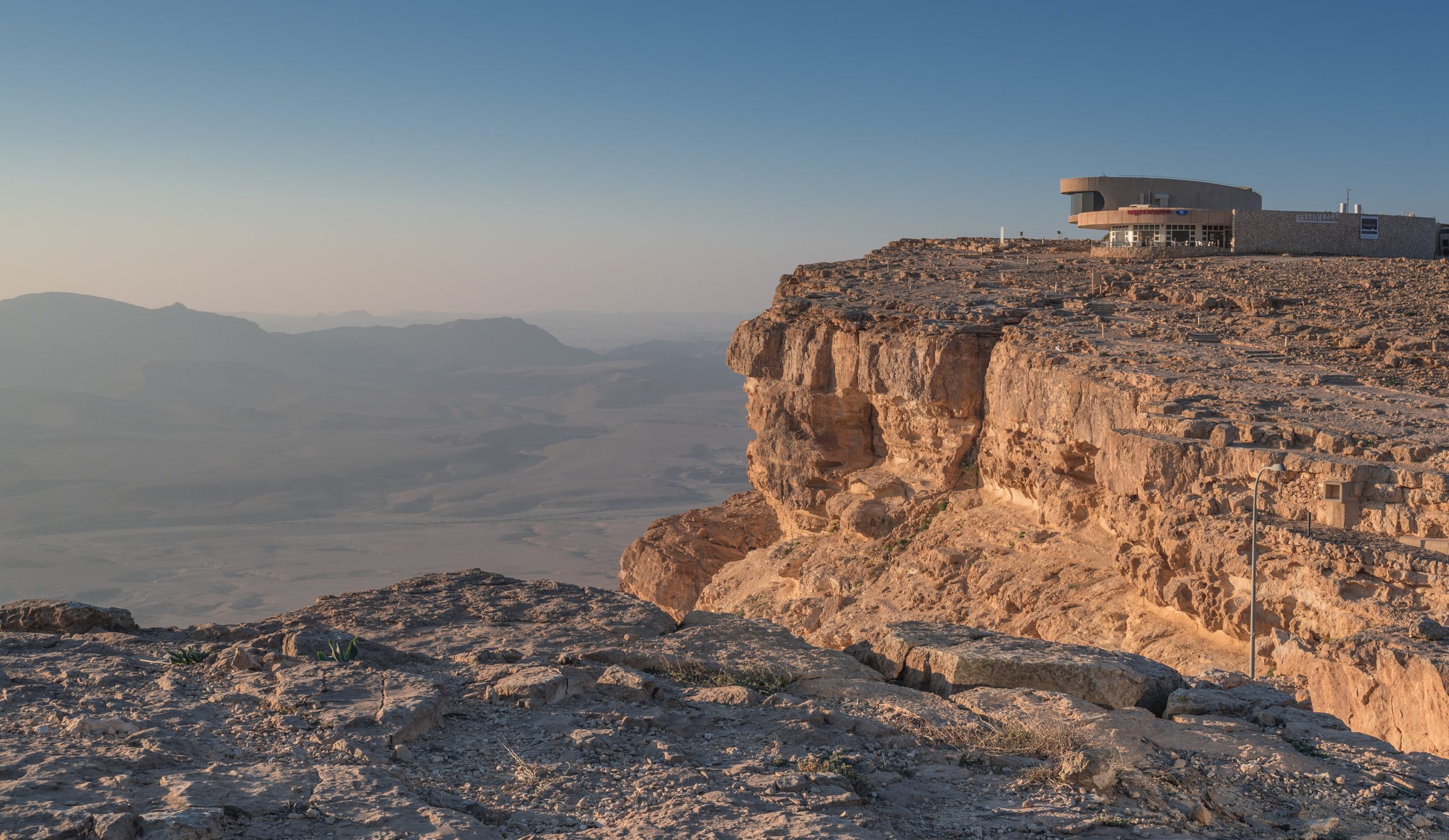
The Negev covers more than half of Israel, and its most dramatic feature is Makhtesh Ramon, a vast erosion crater roughly 40 kilometres long and around 500 metres deep. Its walls show layers of rock in red, yellow, purple and black. With so little light pollution, it is also one of the best places in Israel to see the night sky.
Best time
October to April
Don’t miss
The stars from the crater rim after dark
Far south · Eilat
Eilat and the Red Sea
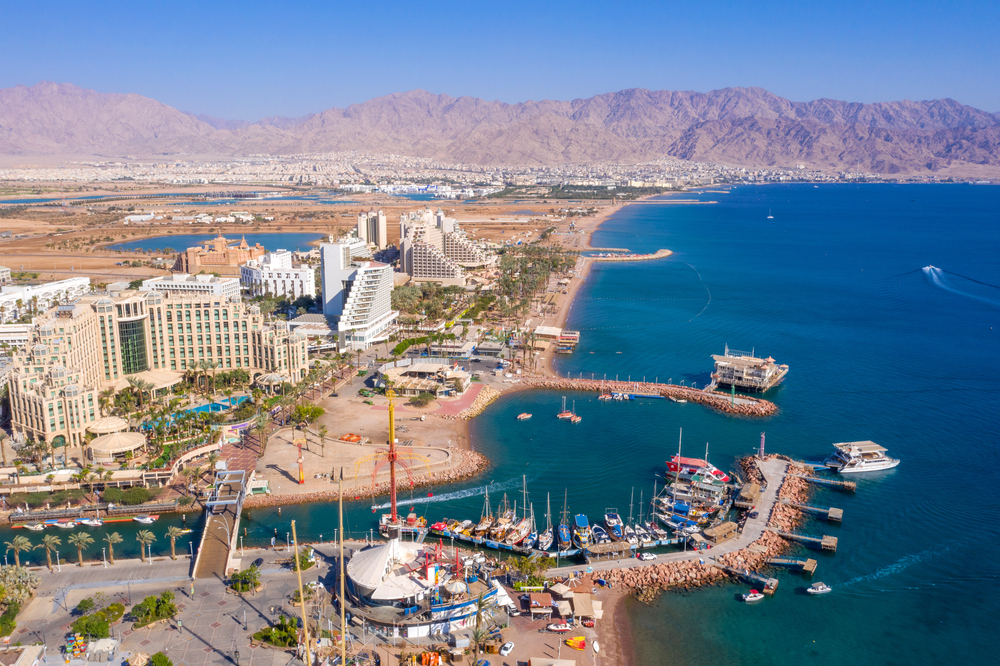
At Israel’s southern tip, the desert meets the Red Sea. The reefs off Eilat are among the northernmost coral reefs in the world, and they start a few steps from the beach: you can snorkel among bright fish and coral without a boat. The water stays warm enough to swim all year, and the red granite mountains behind the town make the setting even more striking.
Best time
November to March on land; diving all year
Don’t miss
Snorkelling at the Coral Beach nature reserve
Beauty in the everyday: Israel’s markets
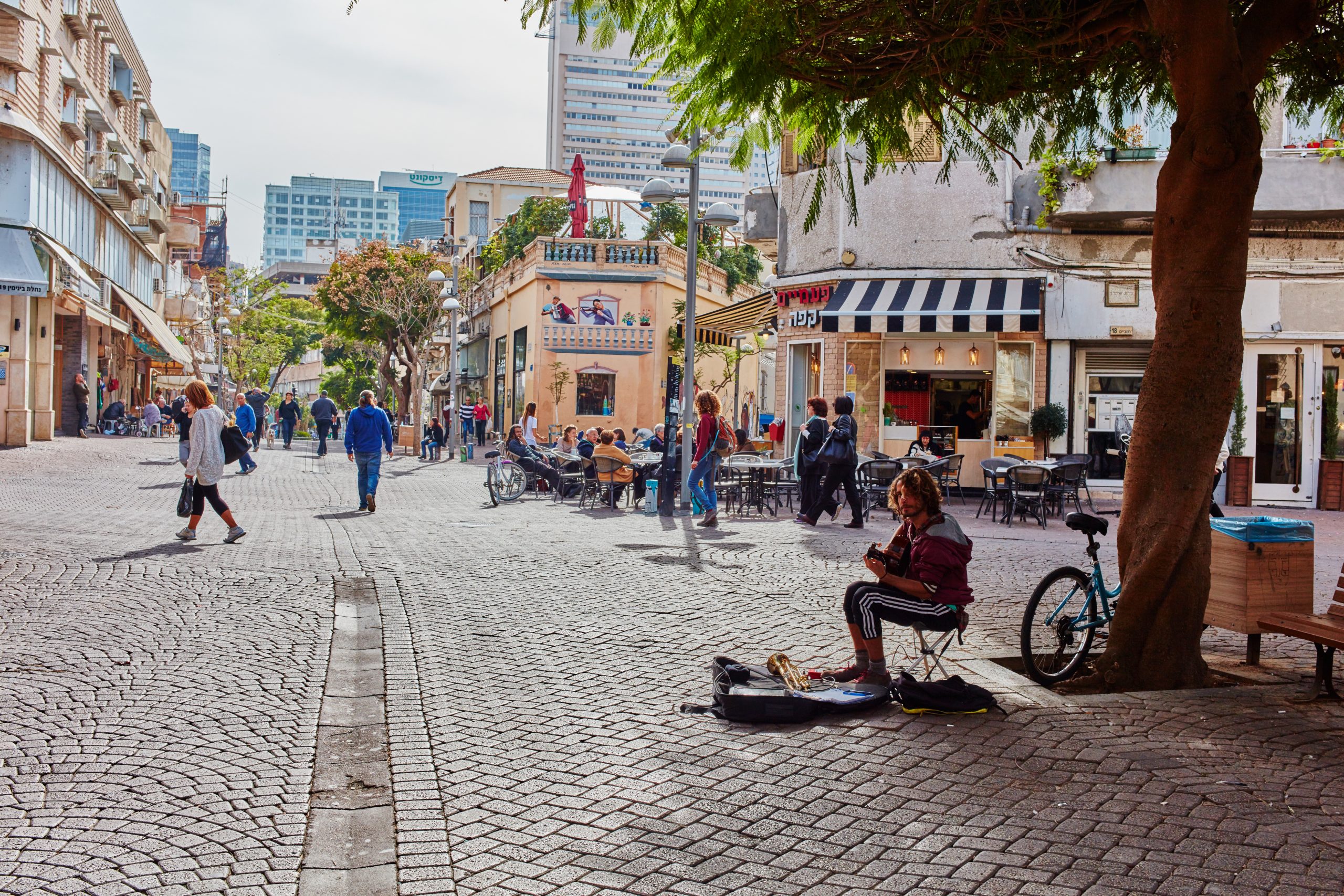
Not all of Israel’s beauty is landscape. Some of the most memorable sights are in its open-air markets, called shuks, where colour, noise and smell arrive all at once: pyramids of spices, crates of fruit, trays of pastries, and stallholders calling out prices over each other.
The Carmel Market (Shuk HaCarmel) is Tel Aviv’s largest, a long, loud strip of produce, spices and street food a few minutes from the beach. Next to it, Nachalat Binyamin hosts an arts and crafts fair on Tuesdays and Fridays.
Machane Yehuda in Jerusalem is busiest on Thursdays and Friday mornings, when the city stocks up before Shabbat. After the stalls close at night, the market reinvents itself, and its shutters, which local artists have painted with portraits, become a gallery while the bars and restaurants fill up.
See it in every season, not just one week
Masa runs programs in Israel for people aged 16 to 40, from six weeks to a full year. Book a short call and we’ll help you find the right one.
Israel changes dramatically through the year, and the best time depends on what you want to see. As a rule, autumn and spring are the sweet spot for the whole country, winter is best for the desert and the green north, and summer is best spent in the water.
Month by month
When Israel is at its most beautiful
JFMAMJJASOND
Red anemones in the northern Negev
Almond blossom
Green Galilee and wildflowers
Birds in the Hula Valley
Desert hiking
Swimming in the Mediterranean
Snorkelling in the Red Sea
Exact timing shifts from year to year with the rain.
Winter (December to February) brings the rain that makes the north green. It is cool and sometimes wet in Jerusalem and the Galilee, but mild and sunny in the desert and in Eilat, and by late January the first red anemones and almond blossom appear.
Spring (March to May) is when Israel is at its most photogenic. The hills are still green, wildflowers cover the open country, and the weather is warm without being punishing.
Autumn (September to November) is the other good window. The sea is still warm, the desert becomes hikeable again, and the migrating birds return to the Hula Valley.
And when it isn’t
It is worth being honest about summer. From June to September the coast is hot and humid, Jerusalem is hot and dry, and the desert regularly passes 40°C, which makes daytime hiking there dangerous. Without rain, the north fades to gold and brown by August. Summer still has its pleasures, especially the beaches and long evenings out, but if you have a choice and you came for the landscapes, avoid it.
Why a week isn’t enough
Most visitors see Israel in ten days: Jerusalem, Tel Aviv, the Dead Sea, maybe the Galilee. It is a good introduction, but it shows you one season of a country that changes completely through the year, and it skips the parts that only reveal themselves with time, like the Saturday morning stillness, the flowers that appear for three weeks and vanish, or the walk you only find because someone local told you about it.
That is what a longer stay gives you. On a Masa program you live in Israel for anything from six weeks to a full year, studying, volunteering, interning or teaching, with trips and hikes built in. Stay through a winter and spring and you’ll see the north turn green, the desert bloom and the whole country change, rather than one week of it.
A note on travelling to Israel now. Whether a country is beautiful and whether it’s the right time for you to go are different questions. Check your own government’s current travel advice, and read how Masa approaches participant safety and security.
Is Israel a beautiful country? Common questions
Is Israel a beautiful country?
Yes. Its beauty comes from variety packed into a small area: Mediterranean beaches, green hills in the Galilee, the golden stone of Jerusalem, the Dead Sea, desert craters in the Negev and coral reefs in the Red Sea, all within a day’s drive of each other.
What is the most beautiful place in Israel?
It depends what you’re drawn to. For many people it’s Jerusalem at sunset, the Dead Sea, or the view into Makhtesh Ramon in the Negev. Others would choose the Bahá’í Gardens in Haifa, the Sea of Galilee in spring, or the coral reefs at Eilat.
When is the best time to see Israel’s landscapes?
Spring, from March to May, is the most beautiful time overall, with green hills and wildflowers. Autumn, from September to November, is also excellent. Winter is best for the desert and Eilat. Summer is very hot, and the north turns brown, so it’s better for beaches than for landscapes.
Is Israel mostly desert?
The Negev desert covers more than half of Israel’s land, but the country is far from all desert. The north is green and wooded, with rivers, waterfalls and a large freshwater lake, and the coastal plain is Mediterranean in climate.
Does Israel have beaches?
Yes. Its entire western edge is Mediterranean coastline, including the city beaches of Tel Aviv. In the far south, Eilat sits on the Red Sea, with coral reefs close to shore. There are also beaches on the Sea of Galilee and the Dead Sea.
Where is the best sunset in Israel?
Anywhere on the Mediterranean coast, because it faces west and the sun sets into the sea. The beaches of Tel Aviv and the old port of Jaffa are favourites. Jerusalem’s stone also turns gold in the evening light.
How many days do you need to see Israel?
About ten days covers the highlights: Jerusalem, Tel Aviv, the Dead Sea and the Galilee. To see the country change through the seasons, you need to stay longer, which is what programs such as Masa make possible.
Leave your details below and a Masa advisor will get back to you about programs that fit your dates and interests. Rather talk now? Book a call with our team.
More articles
Don't Leave Yet - Your Journey to Israel is Right Around the Corner!