If you went to Jewish summer camp, you know.
You know the smell of sunscreen mixed with challah baking in the dining hall. You know the sound of a hundred voices belting “Bim Bam” off-key but perfectly in unison. You know what it feels like to hold hands under the stars during Havdalah, watching the braided candle flicker while someone passes around the spice box.
And if you didn’t go to Jewish summer camp? You’re about to understand why people who did talk about it for the rest of their lives.
Jewish summer camp experiences are different. Not because of the canoes or the arts and crafts or the questionable food (though those exist). Jewish summer camp experiences are different because it’s the one place where being deeply, unapologetically, joyfully Jewish is the default setting. No explanations needed. No being the only one. Just… belonging.
Whether you spent summers at Camp Ramah, URJ camps, Camp Moshava, Habonim Dror, Young Judaea, or any of the dozens of Jewish camps across North America, certain experiences are universal. Certain moments stick with you forever.
This is your guide to the essential Jewish summer camp experiences—the traditions, the rituals, the moments that make camp so magnetic that adults spend thousands of dollars to recreate it decades later.
Let’s go back. Yalla.
What Makes Jewish Summer Camp Experiences Different?
Before we dive into specific experiences, let’s talk about what actually sets Jewish summer camp apart from regular summer camp.
It’s Completely Immersive
At regular camp, you’re Jewish for an hour on Friday night if there’s an optional service. At Jewish camp, you wake up Jewish, eat Jewish, play Jewish, sleep Jewish. The counselor teaching you how to flip a kayak is the same person leading Kabbalat Shabbat services. The kid you compete against in color war is the same one sitting next to you in Israeli dancing.
Everything is Jewish. Not in a heavy-handed way—in a natural, woven-into-life way.
It’s a Jewish Majority
For many campers, Jewish summer camp is the first time they’ve ever been surrounded exclusively by other Jews. No explaining Yom Kippur to classmates. No being the only one who doesn’t eat the cafeteria ham sandwich. Just normalcy.
As one study from the Foundation for Jewish Camp found, Jewish camp creates “the most comprehensive Jewish socialization experience available” to young American Jews. Translation: camp teaches you how to be Jewish by living it, not by studying it.
The Relationships Are Everything
Camp friendships hit different. You’re living with your friends 24/7 for weeks. You’re not just classmates who hang out after school—you’re bunkmates who know each other’s midnight snack preferences, shower songs, and deepest 2am secrets.
Counselors aren’t distant authority figures. They’re rock stars. Role models. The cool older kid who teaches you Hebrew slang and lets you borrow their Maccabiah face paint.
It’s Safe to Explore
Jewish camp is a laboratory. You can try leading services for the first time. You can ask questions about God that would feel weird at home. You can figure out what kind of Jew you want to be without judgment.
As Rabbi Daniel Utley, director of Camp Wise, put it: “Camp services are laboratories—they are different every time, always a learning experience.”
Now, let’s get to the experiences themselves.
Top 15 Jewish Summer Camp Traditions That Made Camp Unforgettable
1. Shabbat at Camp (The Jewish Summer Camp Experience Everyone Remembers Most)
Ask any Jewish camp alum what their favorite part of camp was, and I guarantee you Shabbat comes up within 30 seconds.
Friday Afternoon: The Transformation Begins
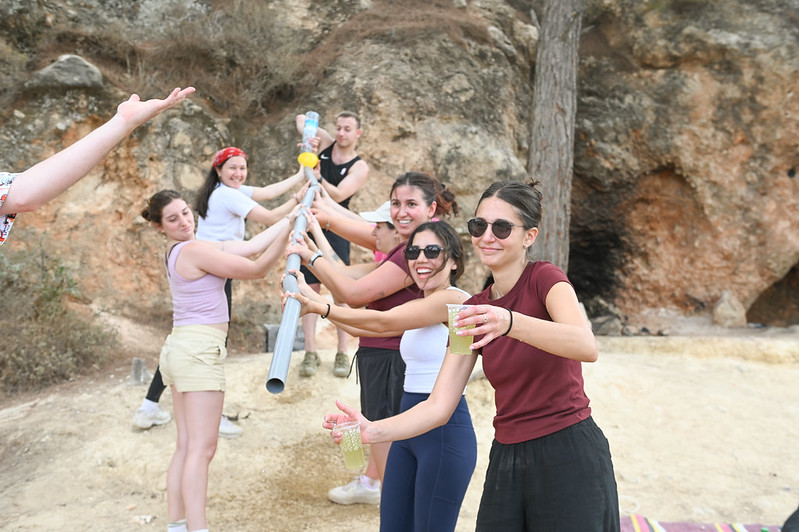
Around 3-4pm on Friday, the entire vibe of camp shifts. There’s a collective exhale. The week’s chaos—swim tests, arts and crafts, cabin competitions—pauses.
Campers shower (actually shower, not the Tuesday “rinse-and-run”). They change into white clothes. At many camps, wearing white for Shabbat is THE tradition—it’s visual, it’s special, and it marks you as part of something.
Walking to Services Together
At many camps, the whole community walks together to the outdoor chapel or lakeside gathering spot. You’re singing. You’re holding hands. You’re watching the sun start to set over the lake (or agam, if you’re at Ramah and everything’s in Hebrew).
One URJ camp staff member described it perfectly: “We walk. We sing. We join hands, gathering more friends as we go. Literally or figuratively, we ascend. We welcome Shabbat.”
Kabbalat Shabbat Services
The ruach (spirit) at Friday night services is unmatched. Campers lead the service, not rabbis. The song leader with the guitar isn’t clergy—they’re a college kid from your camp who’s basically a rock star.
Everyone knows the melodies. Everyone sings at full volume. If you don’t know Hebrew, you fake it and learn by osmosis.
At Camp Ramah in the Poconos, they describe Kabbalat Shabbat as having “a ruach found nowhere else.” The entire camp gathers overlooking the lake. The sun sets during “Lecha Dodi.” The energy is electric and peaceful at the same time.
Shabbat Dinner
Challah. Grape juice (or wine for older campers). Blessings. And then… feast.
Shabbat dinner is THE meal. Real tablecloths. Better food than usual. At some URJ camps, brownies are a Shabbat tradition (yes, it’s important enough that they wrote a song about it: “Candles, Kiddush, Challah, Brownies!”).
Campers and counselors eat together. There’s singing between courses. Sometimes there are d’vrei Torah (Torah thoughts). Sometimes there’s just laughter and inside jokes.
Saturday: The Day You Can Do Anything (Or Nothing)
Saturday at Jewish camp is magic because there’s zero scheduled pressure.
Want to sleep until 11am? Go for it.
Want to skip rocks at the lake for seven hours straight? Nobody’s stopping you.
Want to read in a hammock all day? Perfect.
As one camp alum put it: “Saturdays are coming, and when it’s Shabbat at camp you can do almost literally anything you want, ALL. DAY. LONG.”
Some camps have Shabbat morning services (optional). Some have Israeli dancing. Some have pick-up sports. The point is: it’s yours to choose.
Seudah Shlishit (Third Meal)
Late Saturday afternoon, many camps gather for Seudah Shlishit—a quiet, reflective meal as Shabbat winds down.
At Ramah camps, the oldest campers lead “Slo-ach”—a slow, musical Havdalah approach where the entire camp gathers and sings. It’s one of the emotional peaks of the week.
Havdalah Under the Stars
And then comes Havdalah.
The braided candle. The spices (besamim). The blessings. Holding hands in a huge circle under the night sky. Singing “Eliyahu Hanavi” and “Shavua Tov.”
This is where people cry. Every. Single. Week.
There’s something about the combination of candlelight, the smell of spices, the cool night air, the voices harmonizing, and the knowledge that the special 25 hours are ending that just… hits.
As one camper put it: “Something about a campfire, slow and spirited prayers, and the smell of spices after a relaxing weekend creates an atmosphere of strong emotions. You can’t fight it. Just give in.”
Why Shabbat at Camp Sticks With You
Because it’s the first time many campers experience Shabbat as joyful. Not obligatory. Not boring. But genuinely magical.
And for many, camp Shabbat becomes the gold standard. When they go to college and join Hillel, they’re chasing that Havdalah-under-the-stars feeling. When they have kids and light candles, they’re trying to recreate that Friday night ruach.
Camp teaches you what Shabbat can feel like. And once you feel it, you want it back.
2. Color War / Maccabiah (A Core Jewish Summer Camp Experience)
If Shabbat is the spiritual peak of camp, Color War is the adrenaline peak.
Also called “Maccabiah” at many Jewish camps (after the Maccabees), Color War is the multi-day, all-consuming competition that brings each camp session to its climax.
The Break (The Most Hyped Moment of Summer)
Color War doesn’t start with an announcement. It starts with THE BREAK.
The break is the surprise moment when camp erupts into Color War chaos. It’s kept secret. Staff plan it for months. Campers speculate endlessly.
Some camps do elaborate skits. Some blast music. Some have counselors burst into the dining hall in full costume. The creativity is insane.
And campers chant: “1-2-3-4! WE WANT COLOR WAR!”
At Camp Coleman, staff members submit full proposals (called “bids”) to run Maccabiah. These include themes, Jewish values integration, schedules, decoration ideas, and more. Some staff spend the entire year planning.
Fakeouts
Many camps do “fakeouts”—false alarms that make campers THINK Color War is starting. It builds anticipation and becomes part of the tradition.
The real break, when it finally comes, is pandemonium.
Teams and Colors
Campers are divided into teams—usually 2-6 teams, each with a color and theme.
Some camps use simple colors (Red, Blue, Green, White).
Some use Hebrew words with deep meaning (at Camp Yavneh, team names have Judaic significance).
Some use elaborate themes (Marvel vs. DC, Disney, historical figures).
Face paint comes out. Team chants are practiced. Banners are created. The entire camp becomes color-coded.
The Competitions
Color War isn’t just athletic. It’s EVERYTHING:
Sports:
- Relay races across the entire camp
- Tug-of-war
- Swimming competitions
- Basketball, soccer, softball
- Gaga (Israeli dodgeball in a pit)
Non-Athletic:
- Trivia contests
- Banner painting
- Song and cheer competitions
- Scavenger hunts
- Skit performances
- Even cleaning bunks for points
Jewish Components:
- Torah study competitions
- Hebrew spelling bees
- Israeli geography challenges
- Jewish history trivia
At many camps, even MEALS are part of the competition. The team that sings loudest during birkat hamazon (grace after meals) gets points.
At Camp Wise in Cleveland, there’s a massive 45-minute relay race across the entire campgrounds that ends with team captains having a fire-building contest.
The Intensity Is Real
Color War transforms camp. Kids who never cared about sports suddenly become athletes. Shy campers lead cheers. Counselors cry when their team wins (or loses).
The dedication is absurd. Campers paint their faces every morning. They wear team colors exclusively. They practice cheers at midnight.
Why Color War Matters
It’s not really about winning (though campers will tell you it absolutely is).
Color War teaches:
- Teamwork – Working with people you might not normally hang out with
- Leadership – Stepping up to lead a cheer or motivate your team
- Resilience – Losing gracefully (or trying to)
- Ruach – Giving everything you have to something that ultimately doesn’t matter… but also totally matters
As the Foundation for Jewish Camp notes: “Even though it’s a competition, at its heart, Color War is a chance to get silly, discover hidden talents, build new friendships, practice sportsmanship and teamwork, develop leadership skills, and have tons of fun.”
3. Israeli Staff and Culture (Shaping Jewish Summer Camp Experiences)
Walk into almost any bunk at a Jewish summer camp and you’ll find an Israeli counselor.
These shlichim (emissaries) are usually Israelis in their early 20s who come to North America for the summer to work at camp. And they completely change the experience.
What Israeli Staff Bring:
Hebrew That’s Actually Useful
Not textbook Hebrew. Real Hebrew. Slang. Curse words (which campers LOVE learning). Songs. The stuff you’d actually use in Tel Aviv.
Israeli counselors teach phrases like “yalla,” “sababa,” “balagan,” “chai b’seret” naturally, in context. Suddenly Hebrew isn’t a dead language you study—it’s the cool thing the cool counselor says.
Israeli Music
Israeli pop songs. Rikud (Israeli dancing). Music from the radio in Tel Aviv, not just “Hava Nagila.”
Campers learn the latest hits from Omer Adam, Static & Ben El Tavori, Netta. These songs become the soundtrack of summer.
A Living Connection to Israel
Israeli staff aren’t teaching about Israel from a textbook. They’re FROM Israel. They can answer questions about what it’s really like. They share stories about the army, about their families, about life in Jerusalem or Haifa or wherever they’re from.
For many campers, their Israeli counselor is their first real relationship with an actual Israeli. That connection makes Israel real, not abstract.
Mifkad and Israel Day
At Bnei Akiva camps (Camp Moshava), campers do “Mifkad”—a formation in the shape of the Hebrew letter Chet (ח) where announcements are made, members are counted, and ideology is reaffirmed. Blue and white Israeli flags are everywhere.
Many camps have “Israel Day” planned entirely by the Israeli staff. Israeli food (falafel, hummus, sabich). Israeli games. Israeli music. Educational programs about Israeli history and culture.
Why This Matters
Israel becomes personal. Not political. Not distant. Personal.
When you have an Israeli counselor you adore, when you sing Israeli songs every day, when you learn Hebrew slang from someone who speaks it natively—Israel becomes part of your identity in a way that Hebrew school never achieved.
4. Camp Songs (The Soundtrack of Jewish Summer Camp Experiences)
Every Jewish camp alum can still sing their camp’s alma mater 20 years later. Word for word. Probably off-key.
Camp songs are sticky. They live in your brain forever.
The Classic Jewish Camp Songs Everyone Knows:
“Bim Bam”
The ultimate Shabbat song. It’s a niggun (wordless melody) that everyone knows.
“Bim bam, bim bim bim bam, bim bim bim bim bim bam
Shabbat Shalom (hey!) Shabbat Shalom (hey!)
Shabbat, shabbat, shabbat, shabbat shalom”
“Al Shlosha D’varim”
“On three things the world stands: Torah, work/study, and acts of loving-kindness.”
This song teaches values while being incredibly catchy.
“David Melech Yisrael”
“David melech Yisrael, chai chai v’kayam” (David, King of Israel, lives and endures)
Fast. Repetitive. Gets faster each time. By the end, everyone’s breathless and laughing.
“Hinei Ma Tov”
“Hinei ma tov umah naim, shevet achim gam yachad”
(How good and pleasant it is when brothers/sisters dwell together)
“Lecha Dodi”
The traditional Friday night song welcoming Shabbat, but with camp melodies that make it upbeat and joyful.
Camp-Specific Songs
Every camp has songs unique to them. URJ camps have different lyrics to the same songs. Ramah camps have their own melodies. Habonim Dror camps have labor Zionist songs.
And every camp has an alma mater that makes alumni cry at reunions.
Why Camp Songs Stick
You’re not just singing. You’re singing with 200 people at full volume. You’re singing walking to services. You’re singing after meals. You’re singing at Maccabiah.
The songs become muscle memory. Decades later, someone starts “Bim Bam” and your brain automatically knows every word.
5. Friendship Bracelets and Arts & Crafts (Omanut)
At Jewish camp, you will make friendship bracelets. This is non-negotiable.
The Bracelet Hierarchy:
Campers master specific techniques:
- Box stitch
- Zipper stitch
- Cobra stitch
- Spiral stitch (the advanced move)
By mid-summer, campers are walking around with 15 friendship bracelets up each arm. Some stay on for years (literally).
Lanyard Keychains
The other camp craft staple. Weaving plastic lace (gimp) into spiral, box, or butterfly patterns. Your keychain collection becomes a badge of honor.
Why This Matters
It’s not really about the crafts. It’s about sitting with your friends, talking for hours, making something with your hands while your brain zones out.
The bracelets become talismans. Years later, you’ll find one in a drawer and immediately remember the person who made it for you at camp in 2012.
6. The Last Night of Camp (The Best and Worst Night)
Everyone knows: the last night of camp is the most exciting night, and the last day of camp is the worst day of the year.
Staying Up All Night
Last night traditions vary by camp, but the universal one is: nobody sleeps.
Campers stay up until sunrise. Counselors look the other way. There’s usually a special late-night program—a dance, a bonfire, a talent show.
Saying Goodbye
And then the goodbyes start.
Campers exchange phone numbers, Instagram handles, addresses. They promise to stay in touch (and many actually do—camp friendships are STICKY).
Counselors give final hugs. People cry. A lot.
The Last Day (The Actual Worst)
The bus pulls up. Parents arrive. And you have to leave.
Campers are crying. Counselors are crying. Parents are confused why their kid is devastated to leave a place they were nervous about going to eight weeks ago.
“The last day of camp is the worst day of the year. But we also know that the last night of camp is the most exciting.”
7. Canteen/Shekem
The canteen is camp’s version of a convenience store / candy shop / holy grail.
Campers buy snacks with camp “money” or tokens or whatever system each camp uses. The canteen sells:
- Candy
- Chips
- Ice cream
- Soda
- Camp merch (t-shirts, hats, sweatshirts)
Why It’s Special:
Canteen isn’t just about snacks. It’s about autonomy. You get to CHOOSE. In a structured environment, canteen is freedom.
Also, “meeting behind the canteen” was code for your first kiss. Every camp alum knows this.
8. Letters from Home (No Phones = Real Mail)
Most Jewish overnight camps are phone-free. No cell phones. No Instagram. No TikTok.
Communication with home happens through LETTERS.
The Letter System:
Parents write letters. Campers write letters. Real paper. Real stamps. Real handwriting.
Getting mail is a highlight of the day. When mail call happens and your name is called, it’s the best feeling.
Why This Matters:
Unplugging for the summer is radical. Campers actually talk to each other. They’re present. They’re not performing for social media.
And the letters? They’re tangible. Years later, you’ll find them in a box and remember summer 2015 in a way an Instagram story never could.
9. Israeli Dancing (Rikud)
At Jewish camp, you WILL learn to grapevine.
Israeli dancing (rikud) is a staple. Campers learn circle dances, partner dances, and line dances to Israeli music.
The Classics:
- Hora – The circle dance everyone knows
- Mayim Mayim – Water, water! (Clap clap!)
- Hava Nagila – The most famous Jewish song, danced at every wedding ever
Israeli dancing is goofy and fun and nobody cares if you mess up because everyone’s messing up together.
10. Camp Traditions That Define Jewish Summer Camp Experiences
Every camp has traditions that seem normal to insiders and completely bizarre to outsiders.
Examples:
Camp Ramah’s “Mud Hugs”:
At Ramah in California, the oldest campers go on a five-day camping trip. When they return, they hike 8.5 miles back to camp, then run into camp COVERED HEAD-TO-TOE IN MUD and hug everyone.
It’s disgusting. It’s beloved. It’s a rite of passage.
Habonim Dror’s “Avodah” (Work):
Every morning, campers do avodah—chores to maintain the camp. It’s based on kibbutz values where everyone contributes to the community.
Campers clean bathrooms, sweep dining halls, maintain grounds. It teaches responsibility and collective ownership.
Bnei Akiva’s Mifkad:
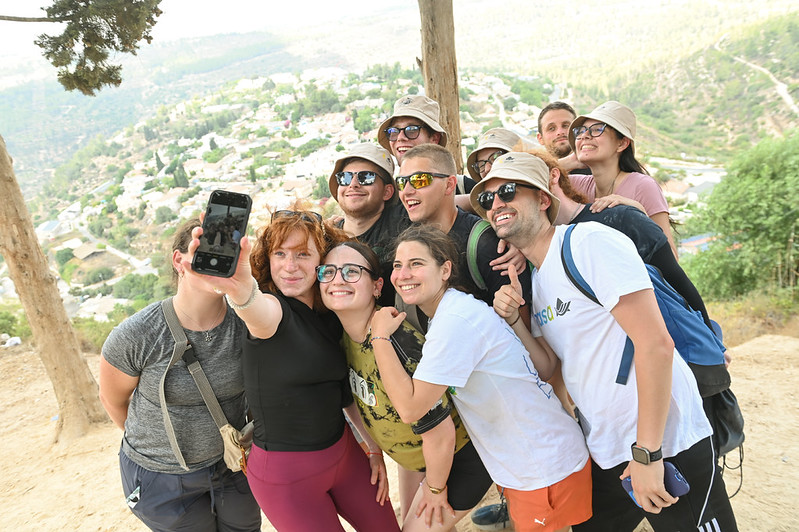
Standing in formation in the shape of the Hebrew letter Chet (ח), announcements are made, and campers reaffirm their commitment to Torah V’Avodah (Torah and Labor).
URJ Camps’ Specific Food Traditions:
At URJ Camp Newman, the Shabbat song goes “Candles, Kiddush, Challah, BROWNIES!” because brownies are served every Shabbat.
At other camps, it’s “Candles, Kiddush, Challah, Honey!”
These micro-traditions matter intensely to the people who grew up with them.
11. CITs (Counselors-in-Training) and the Leadership Pipeline
Around age 16, campers “age out” of being regular campers and become CITs—Counselors-in-Training.
CITs live in a weird liminal space. Not quite campers, not quite staff. They’re learning to be counselors while still experiencing camp magic.
What CITs Do:
- Shadow counselors
- Lead activities
- Get leadership training
- Work harder than anyone else
- Feel like they’re finally “important”
Why It Matters:
Camp creates a leadership pipeline. CITs become junior counselors. Junior counselors become full counselors. Counselors become unit heads, program directors, camp directors.
Entire careers in Jewish education start at camp.
And the best part? These aren’t just jobs. They’re reunions. Staff week before campers arrive is a reunion of camp friends who grew up together.
12. Camp Marriages (Yes, Really)
It’s well-documented: hundreds (maybe thousands) of Jewish marriages can be credited to camp.
People meet as campers. They date as counselors. They get engaged at camp reunions. They get married and have kids who go to the same camp.
Camp Ramah literally says in their promotional materials: “Ramah is celebrated as a place where young Jews make lifelong Jewish friends, and hundreds, perhaps thousands, of Jewish marriages can be credited to the Ramah summer camp experience.”
Why Camp Relationships Stick:
You’re not just dating someone you met at a party. You’re dating someone you lived with for two months. You’ve seen them at their best and worst. You know how they lead services, how they treat younger campers, what they’re like at 6am.
Camp relationships are built on shared values, shared experiences, and deep knowing.
Also: “I come to camp to meet my bridesmaids” is a real quote from a real person.
13. The Camp Reunion (When You Realize It Never Really Ended)
Years later, you’ll go to a camp reunion.
And within five minutes, you’re 14 again.
What Happens at Reunions:
- People fly in from across the country
- You sing the alma mater and cry
- You perform old cheers
- You tell the same stories
- You realize your camp friends know you in a way your “real life” friends don’t
Camp reunions prove that camp friendships aren’t just “summer friends.” They’re REAL friends.
As one camp professional noted: “It’s rare in life to become so close to that many people in such a short period of time, so it’s no surprise that five, ten, fifteen, infinity years down the line, the people that were in your bunk are still the people you call your best friends.”
14. “Camp Time” (The Time-Space Continuum Break)
Camp has its own timeline that defies physics:
Camp Time Translation:
- 1 camp day = 1 real-world week
- 1 camp week = 1 real-world month
- 1 camp session = 6 real-world months
You pack a lifetime of experiences into 4-8 weeks.
That’s why leaving feels impossible. You’re not just saying goodbye for a few months. It FEELS like you’re saying goodbye forever.
15. The Feeling You Can’t Quite Explain
Here’s the thing about Jewish summer camp experiences: they’re hard to explain to people who didn’t go.
You can tell people about Color War, about Shabbat, about Israeli dancing. But you can’t quite convey the FEELING.
The feeling of:
- Being surrounded entirely by other Jews
- Having Hebrew be normal
- Leading services for the first time
- Sitting by the lake at sunset
- Realizing you belong
Camp teaches you what it feels like to be in a Jewish community where you’re not explaining, not defending, not educating—just BEING.
And once you feel that? You spend the rest of your life trying to recreate it.
Why These Jewish Summer Camp Experiences Matter (And Last Forever)
Studies consistently show that Jewish summer camp has one of the highest impacts on lifelong Jewish identity.
According to research from Brandeis University: “Each camp has a very strong and intentional culture. Camp’s power to socialize young Jews—How do I be a Jew? How do I be a member of the Jewish community?—depends on this culture.”
Camp alumni are more likely to:
- Marry Jewish
- Join synagogues
- Send their kids to Jewish day school
- Be involved in Jewish communal life
- Support Israel
- Light Shabbat candles
But here’s the thing: camp doesn’t create these outcomes by lecturing.
Camp creates them by letting you FEEL what it’s like to be joyfully, completely, unselfconsciously Jewish.
You don’t study about lighting Shabbat candles. You light them every Friday while your friends sing badly and someone’s counselor makes a terrible joke and everyone laughs and it’s magic.
You don’t read about Israeli dancing. You grapevine poorly in a circle of 50 people and trip over your own feet and everyone keeps dancing anyway.
You don’t memorize prayers. You learn them by singing them 40 times over eight weeks until they’re in your bones.
Camp is experiential Jewish education at its peak,
The Magic of Jewish Summer Camp Experiences
Jewish summer camp experiences aren’t just nostalgia.
They’re formative.
They teach you that being Jewish can be fun, joyful, central to your identity—not just something you do on holidays.
They show you what community feels like when it’s built on shared values, shared songs, shared late-night conversations about big questions.
They give you friends who GET it without explanation.
And decades later, when you hear someone start humming “Bim Bam,” you’ll join in automatically. You’ll smile. And for a moment, you’re back at camp, standing by the lake, holding hands during Havdalah, feeling like you belong.
That feeling? It never really goes away.
Shabbat Shalom. Yalla. Sababa.
Want to recapture that Jewish summer camp feeling? Explore Masa Israel Journey programs for immersive experiences in Israel where Hebrew, Jewish community, and Israeli culture are part of daily life—just like camp, but for young adults.