

How do you not look like a tourist in Israel? From someone who learned it the hard way: dress casual (jeans and a tee really do go everywhere here, even weddings), lose the socks-and-sandals — especially once fall arrives — cover up a bit in Jerusalem and at religious sites, walk with confidence, pick up a few words of Hebrew, grab a Rav-Kav card, only tip (around 10%) at sit-down restaurants, haggle only in the markets, and don’t flinch when everyone seems to be yelling — that’s just how people talk. Do those, and you’ll blend right in.
When I first landed in Israel, I might as well have had “TOURIST” printed on my forehead. I was over-apologizing to bus drivers, tipping like I was back home, wearing sandals in November, and physically jumping every time two Israelis had a completely normal (loud) conversation next to me. A few months in, something quietly shifted — and one day people started asking me for directions instead of the other way around.
So this is everything I wish someone had told me on day one about how to not look like a tourist in Israel — the clothes, sure, but also the attitude, the words, the money, the transit, and the little unwritten habits that quietly mark you as a local. None of it is about pretending to be someone you’re not, and none of it is complicated. It’s just about reading the room, and it comes faster than you’d think once you know what to look for.
Dress Codes in Israel: How Not to Look like a Tourist in Israel 101:
“When in Rome, do as the Romans do” is a popular saying in English to follow the costumes of the people whose country you’re visiting. So, what does that look like in Israel? How can you not stand out as a tourist/visitor here? Here are some tips on the dress code in Israel and how not to look like a tourist in Israel.
Female and Male Dress Code in Israel
Dressing in Tel Aviv and generally around the country
Basically, there is no dress code. What is unique and special about Israel is that you can wear whatever you want and will most likely never feel judged. If you live in the Old North of Tel Aviv, then people might come across as more judgmental about what you’re wearing. However, if you’re in the area of Florentin in Tel Aviv, they seem to care a lot less a bout appearances, which, from my experience, is most of Israel.
Dressing in Jerusalem and other religious cities
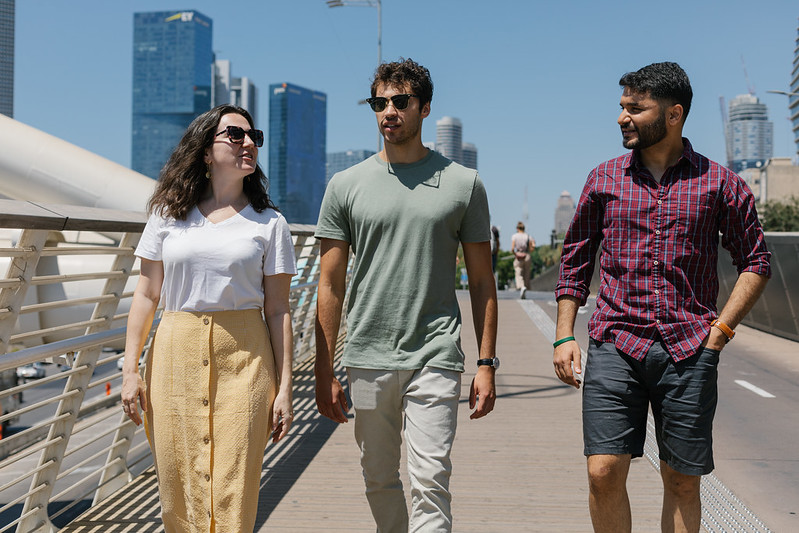
Jerusalem is a more serious city compared to other cities in Israel. Also, because it is more religious, I recommend wearing clothes in the summer that don’t show too much skin, despite the heat. While probably no one will genuinely care, one might feel more comfortable covering up, especially when visiting religious sites. There is a general dress code for women, which usually entails covering one’s knees, elbows, and maybe even hair. If the sites are Jewish, men might also be asked to put on a kippah.
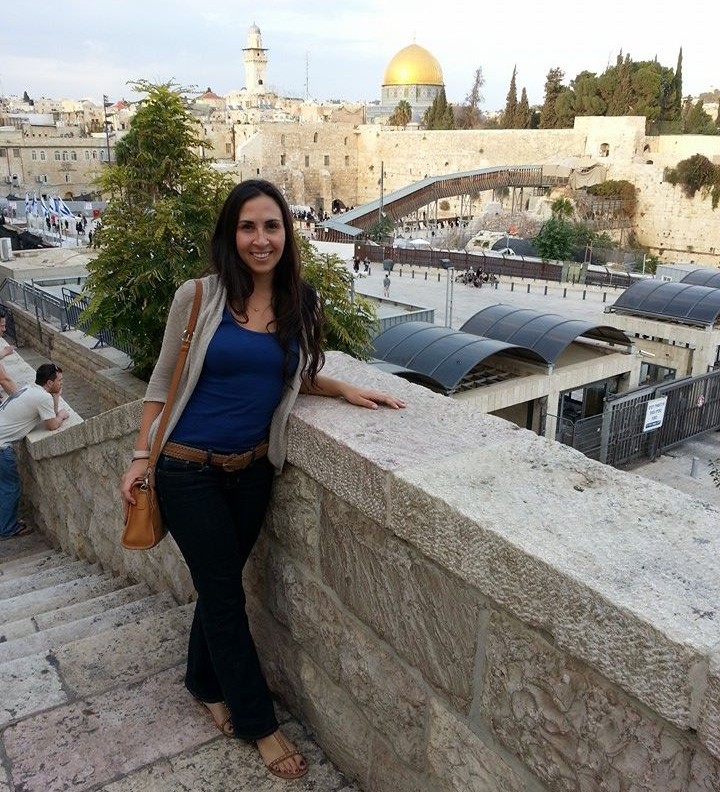
In general, Israelis tend to wear a t-shirt and jeans on most outings. This includes fancier occasions too, such as going out to a nicer restaurant and weddings!
Dress for the season (the classic giveaway)
Another easy way not to stand out — and it took me an embarrassingly long time to clock it — is to skip the “summer” clothes during October and November. Tourists are often the only ones in sandals and shorts during this time, so they’re easy to spot; although it’s still warm during the day, most Israelis have switched to long pants and fall attire. That said, if you don’t care and want to wear shorts — wear shorts! Israelis won’t mind what you wear, as long as you’re doing what feels comfortable to you.
How not to look like a tourist in Israel
Confidence is the first and foremost most important feature of not looking like a tourist in Israel. Israelis stride with seeming confidence wherever they go. Whereas people from other regions of the world might approach being here with more timidness and shyness, especially when all they can hear is the constant, primarily friendly yelling, honking, and shouting that’s taking place.
Another way not to stand out is by not wearing “summer” clothes during October and November. Tourists are often the only ones wearing sandals and shorts during this time, so it’s easy for them to be spotted. Although it’s still warm during the day, most Israelis begin wearing long pants and fall attire. However, if you don’t care and want to wear shorts – wear shorts! Israelis won’t mind what you wear as long as you do what feels comfortable.

The dead giveaways: tourist tells to drop
Beyond clothes, there’s a whole set of little habits that scream “just landed.” The fastest way to not look like a tourist in Israel is to quietly retire these:
- Socks with sandals. The eternal giveaway, and instantly spotted from across the street. Pick one or the other.
- The visible money belt or bag clutched to your chest. Nothing says “I’m nervous and carrying valuables” louder.
- Over-apologizing. In a culture this direct, a stream of “so sorry, excuse me, sorry” reads as oddly formal. A quick slicha and moving on is the local move.
- Standing frozen in the middle of the sidewalk with a giant map or phone held high. Step to the side, glance, keep moving.
- Waiting politely for a perfect gap in line. Israeli lines are more of a suggestion. Hold your place, lean in a little, don’t be shy.
- The sunburn. The Mediterranean sun is no joke — get some color gradually, not the full lobster on day two.
- Talking loudly in English on the bus. Not forbidden, just a beacon. Keep it low-key.
Walk like you belong: confidence and the “yelling”
Confidence is the first and foremost most important feature of not looking like a tourist in Israel. Israelis stride with confidence wherever they go, while people from other parts of the world often approach things with more timidness and shyness — especially when all they can hear is the constant, primarily friendly yelling, honking, and shouting going on around them. That timidity is more noticeable than any backpack.
And that volume was the thing that used to rattle me most. The animated street-corner “arguments” that turn out to be friends chatting, the passionate debates over nothing — it can feel like everyone’s furious. They’re not. It’s warmth, it’s dugri (straight-talking) directness, and it’s completely normal. Once you stop flinching and start rolling with it — even joining in — you’ve crossed a real line from visitor to local.
Talk like a local: a few words of Hebrew go a long way
You do not need to be fluent. But sprinkling in a handful of Hebrew words instantly changes how people read you. The ones I’d learn first:
- Slicha — “excuse me” / “sorry” (your all-purpose word)
- Toda — thank you
- Ken / Lo — yes / no
- Bevakasha — please / here you go
- Sababa — “cool / all good” (peak local energy)
- Kama ze? — “how much is this?” (essential at the shuk)
- Yalla — “let’s go / come on” (you’ll hear it 400 times a day)
Even attempting Hebrew before defaulting to English signals that you’re not just passing through. Most Israelis speak great English and will happily switch — but they clock the effort, and it changes the whole interaction.
Money moves: tipping, haggling, and cash
Money habits are a dead giveaway, and they cut both ways. On tipping: at sit-down restaurants, around 10% is standard (12% if service was great) — but don’t go tipping every taxi driver, barista, and shopkeeper the way you might back in the States. Over-tipping is a very tourist move. Most other services simply aren’t tipped.
On haggling: this trips people up constantly. You do not haggle in regular shops, supermarkets, or restaurants — prices are fixed and trying to bargain is awkward. But in the markets — the shuk, the Old City stalls, souvenir stands — bargaining is expected, even fun. Ask kama ze?, look mildly unimpressed, counter low, and enjoy the dance. Carrying some cash helps, because plenty of market stalls and small spots are card-shy.
If you want the real numbers on what things cost here so nothing catches you off guard, my cost of living in Israel guide breaks it all down.
Get around like a local: Rav-Kav, sheruts, and Shabbat
Nothing marks a tourist like fumbling with transit. Two quick fixes. First, get a Rav-Kav — the rechargeable card (or app) for buses and trains. Locals tap and go; tourists dig for cash and hold up the line. Second, learn the sherut — the shared taxi-vans that run set routes, are cheap, and even operate on Shabbat when buses don’t.
And speaking of Shabbat: this is the rhythm that catches every newcomer. From Friday afternoon to Saturday night, much of the country slows or stops — public transport included in most places (Tel Aviv has some exceptions now). A local plans around it; a tourist gets stranded at a closed bus stop on a Saturday morning wondering where everyone went. Know the pause is coming, stock up on Friday, and lean into a slow Shabbat like the locals do.
Eat and drink like a local
A couple of small things at the café and the table go a long way. When you order coffee, skip “latte” — ask for a hafuch (Israel’s version, and the default milky coffee). Order shakshuka for breakfast, know your way around a sabich and a proper hummus joint (where hummus is a hot, fresh meal, not a dip), and don’t be shy at the shuk — grazing your way through Machane Yehuda or Carmel Market, sampling as you go, is exactly what locals do.
One more: Israelis eat late and linger. A rushed, early dinner is a tourist rhythm; settling in for a long, loud, late meal is the local one. And when someone offers you food — which happens constantly — say yes. Turning down a stranger’s plate of food is one of the least Israeli things you can possibly do.
Blending in changes a bit by region
One thing worth knowing: how to not look like a tourist in Israel isn’t identical everywhere. Secular, coastal Tel Aviv rewards relaxed, beachy confidence and barely registers what you wear. Jerusalem and other traditional or religious areas ask for a little more modesty and awareness. Mixed cities like Haifa are easygoing and diverse. And out on a kibbutz or in the desert, practical, outdoorsy simplicity is the whole vibe. Read the specific place you’re in rather than applying one look to the entire country — that adaptability is itself the most local move there is.
A few more habits that give locals away
Once the big stuff is handled, it’s the micro-habits that complete the picture of how to not look like a tourist in Israel:
- Personal space is closer here. People stand nearer in line and in conversation than you might be used to. Don’t keep backing away — it reads as standoffish.
- Cross the street with conviction. Locals move; hesitant, over-cautious road-crossing is a tell.
- Bring your own bag to the shuk. Pulling out a reusable bag at the market is peak local. Fumbling for change while the vendor waits is not.
- Sit and linger. A café here isn’t a grab-and-go — order a hafuch, stay an hour, watch the street. Rushing your coffee is a tourist move.
- Carry a water bottle, not a guidebook. Locals hydrate constantly and never hold a paperback map. Your phone, glanced at discreetly, does the job.
None of these are rules — they’re just the quiet tells. Drop a few and you’ll be amazed how quickly you stop reading as a visitor, and how naturally you stop looking like a tourist in Israel at all.
Don’t stress about it (the reassuring part)
Here’s the truth to end on: nobody in Israel is really judging you for looking like a tourist. Israelis are famously welcoming, they love that you came, and most will happily switch to English and point you the right way. So this whole guide to not looking like a tourist in Israel isn’t about anxiety or disguise — it’s about comfort. The more you understand the local rhythm, the more relaxed and at home you feel, and the more you get to experience Israel the way Israelis do rather than from behind a tour-group lanyard. Blend in for your own sake, not because anyone’s keeping score. Being a warm, curious, respectful guest matters far more than a perfect performance of “local.”
The real secret to not looking like a tourist in Israel
Here’s the thing I figured out somewhere in month three: the single best way to stop looking like a tourist is to stop being one. All the tips above are shortcuts to something that happens naturally the longer you’re here — the confidence, the Hebrew, the rhythm, the knowing which shuk stall is best. You don’t memorize your way to blending in. You live your way there.
That’s exactly what I did — I came on a Masa program, and a few months of really living here did what no packing list ever could. If Israel has its hooks in you and ten days (or two weeks) doesn’t feel like enough, you can live here for real: Masa programs let you spend anywhere from a few weeks to ten months in the country — with your own apartment, a community, Hebrew classes, and a grant — whether that’s a gap year, an internship, or a volunteer track. Along the way you’ll figure out whether you’re a Tel Aviv or Jerusalem person, and you’ll discover the best spots in the country the way locals do.
By the end, you won’t be trying not to look like a tourist. You just… won’t be one. And someone fresh off the plane will be asking you for directions.
Explore Masa programs in Israel →
Yalla — go blend in. And when someone finally asks you for directions, you’ll know you made it.
FAQs About Not Looking Like a Tourist in Israel
How do you not look like a tourist in Israel?
Dress casually (jeans and a tee work almost everywhere), avoid socks-with-sandals and summer clothes in the fall, cover up a bit in Jerusalem and at religious sites, carry yourself with confidence, learn a few Hebrew words, use a Rav-Kav card, tip around 10% only at restaurants, and haggle only in markets. Above all, don’t be thrown by the loud, direct communication style — it’s friendly.
What is the dress code in Israel?
For most of the country, especially Tel Aviv, the dress code is very relaxed — jeans and a t-shirt go nearly everywhere, even to nicer restaurants and many weddings. Jerusalem and religious sites are more conservative, where covering knees and shoulders (and sometimes hair) is expected, and men may need a kippah at Jewish holy sites.
Do you need to speak Hebrew to blend in in Israel?
No. Most Israelis speak excellent English, but learning a few words like slicha (excuse me), toda (thank you), and sababa (cool) instantly changes how locals read you and shows you’re making an effort, which they appreciate.
Should you tip in Israel?
Yes, but mainly at sit-down restaurants, where around 10% (up to 12% for great service) is standard. Unlike in the US, you generally don’t tip taxi drivers, baristas, or shopkeepers, so over-tipping everywhere is a giveaway that you’re a tourist.
Can you haggle in Israel?
Only in the right places. Bargaining is expected and even fun in markets like the shuk, the Old City stalls, and souvenir stands, but not in regular shops, supermarkets, or restaurants, where prices are fixed.
What’s the biggest thing that makes tourists stand out in Israel?
A few things: wearing shorts and sandals once fall arrives, over-apologizing, moving timidly, and being visibly rattled by the loud, direct way Israelis communicate. Confidence and a relaxed, casual style do more to help you blend in than any specific outfit.
How to Dress in Israel
For the most part, the Israeli dress code is very relaxed. So, as long as you are comfortable with what you are wearing, you should be more than fine. 🙂
Also, if you want to find out what to pack for Israel for your trip, check out my blog post on the Ultimate Packing List for Israel to save you a headache from figuring out what to bring.
More articles